Unforgettable Junior Speakers Programme
1st Lesson Starts 03 August 2026
Your Child Has a Voice.
Let's Make Sure the World Hears It.
Unforgettable Junior is a six-month coaching programme combining public speaking, English language development, and specialist speech support for children in Grade 1 through Grade 12.
August 2026 intake · Limited spots per level
⭐️⭐️⭐️⭐️⭐️
Part of the Unforgettable Speakers family, 13,500+ professionals trained
About the Programme
This Programme Was Built for Your Child
The Unforgettable Junior Speakers Programme is for children who have something to say, and need the right environment to learn how to say it. It is for the child who goes quiet in class even though they know the answer. The one who speaks but isn't always understood. The one who is confident at home but freezes in front of others. And the one who is still finding their feet in English, because it is not the language they grew up speaking.
South Africa is a country of many languages and many starting points. A child whose mother tongue is Zulu, Sotho, Afrikaans, or Xhosa should not feel that English is a barrier they have to overcome on their own. This programme creates a space where children are met exactly where they are, and guided forward from there, in a way that builds on who they already are rather than asking them to be someone different.
Over six months, children work in small groups with experienced facilitators, supported by a qualified speech therapist and an English language educator. Whether your child needs to build foundational confidence, strengthen how they express themselves, or simply be given the opportunity they were never offered at school, this is that opportunity.
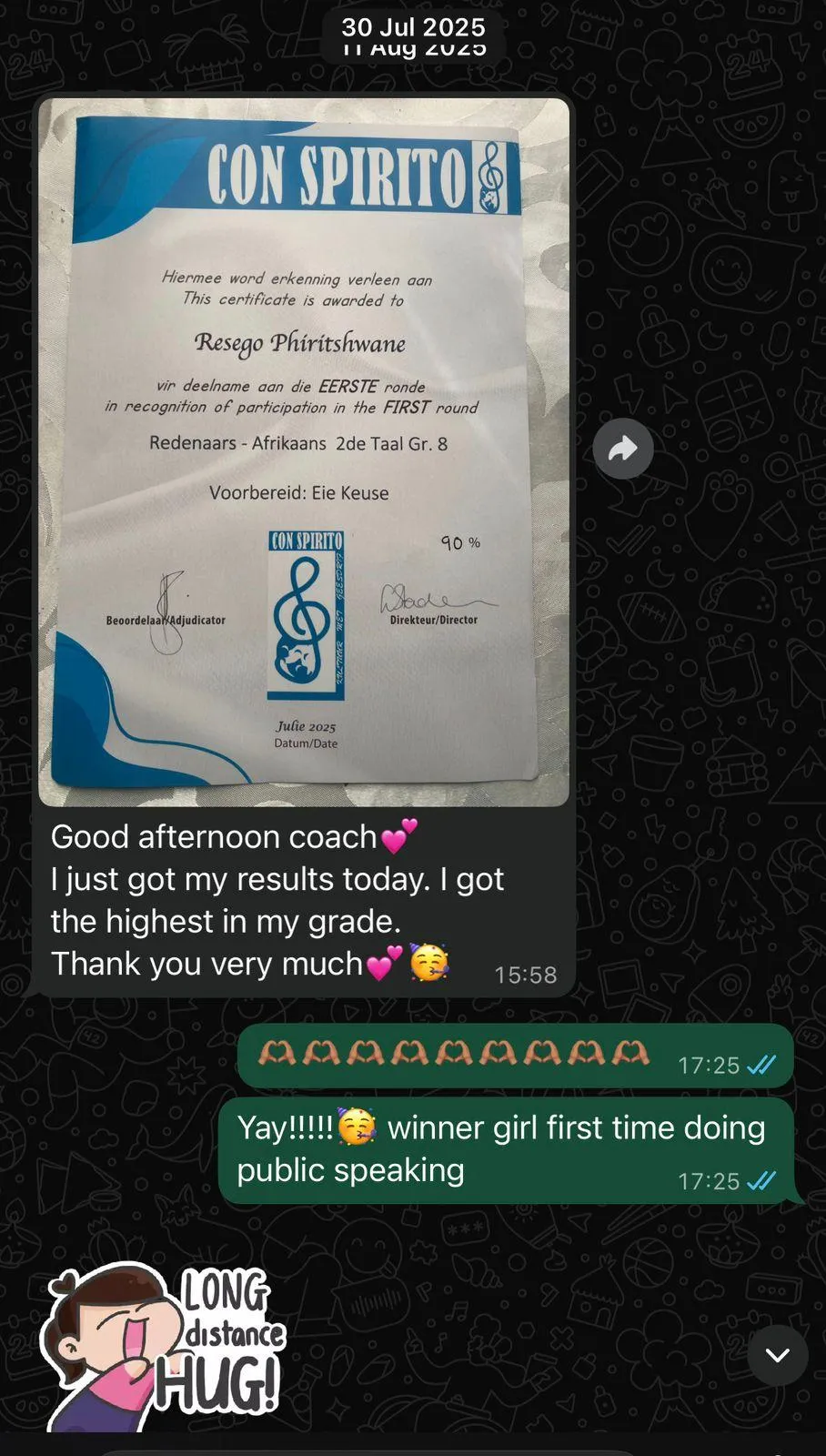
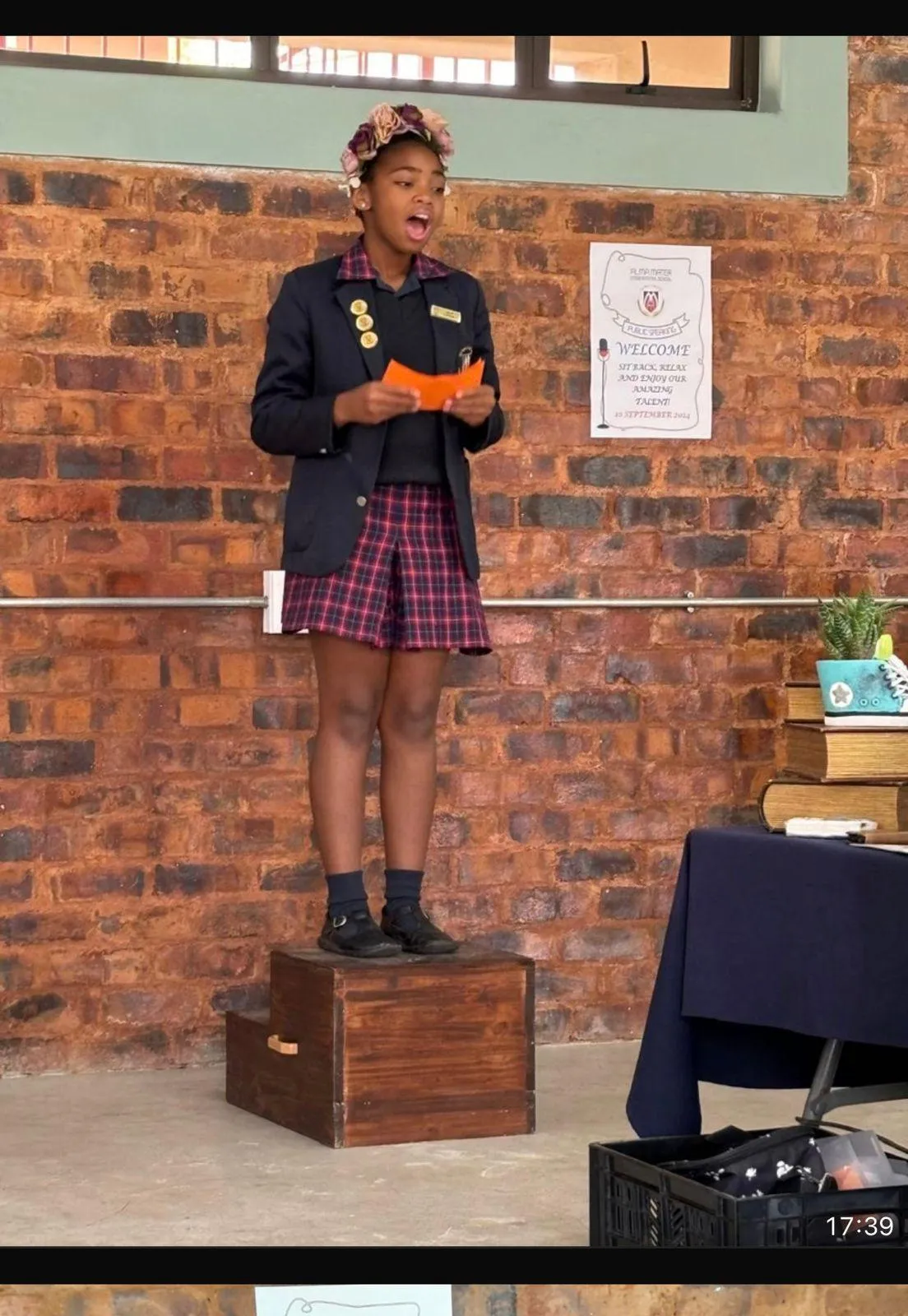
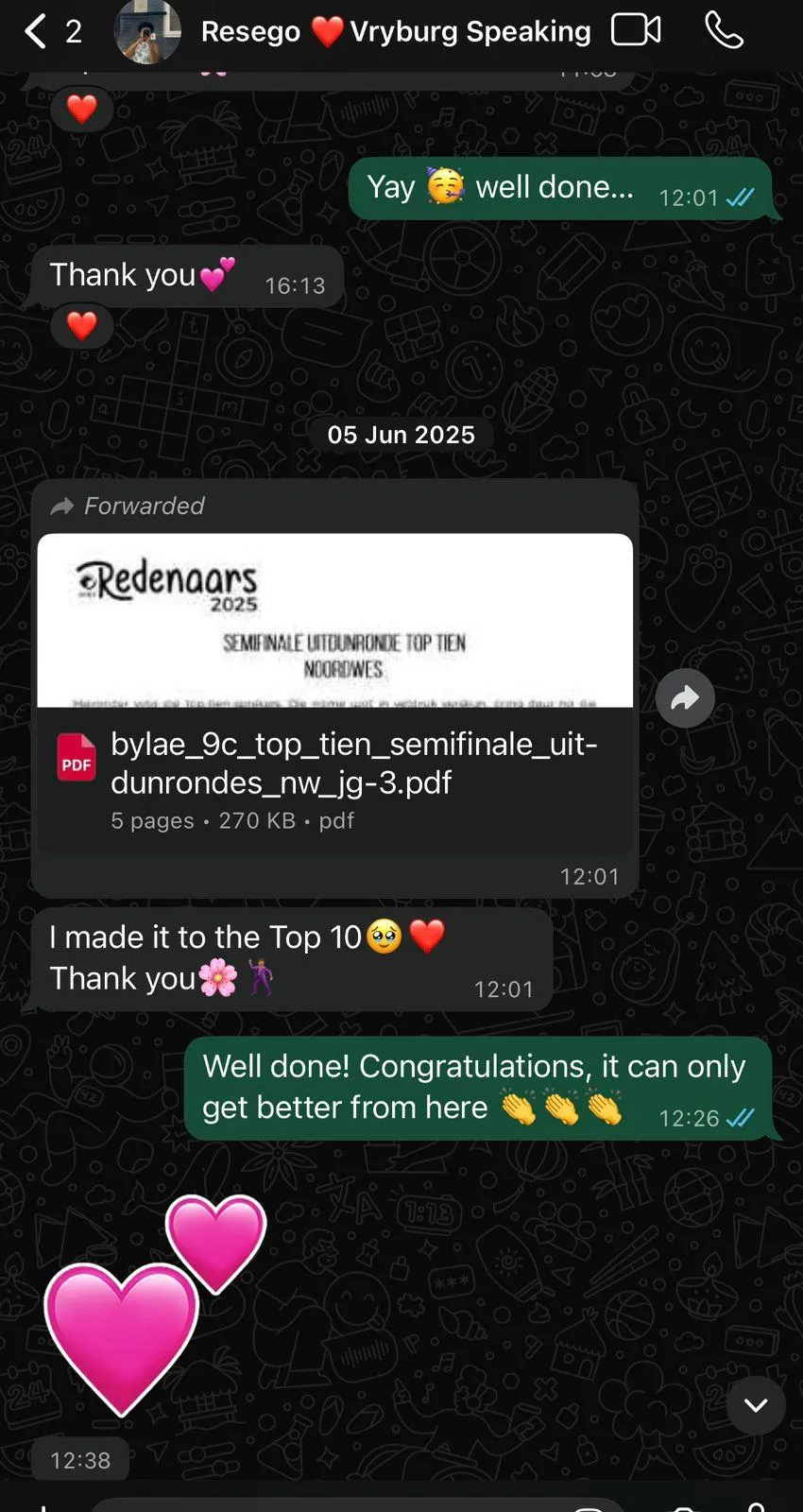

Meet Your Lead Facilitator
Rose Seima — She Lived What She Teaches
Lead Facilitator · Junior Programme
Rose did not grow up with access to polish or privilege. She attended a township school where English was the language of the classroom but not of home, and she figured out very early that how you communicate shapes how the world receives you. So she taught herself.
She studied presenters on Yo-TV the way other children studied textbooks, watching how they paused, how they owned a room, how they made people feel. She practised. She refined. She built something in herself that no one handed her.
By sixteen, she had co-founded a youth initiative and was already standing in front of business leaders, pitching ideas and securing sponsorships. By the time she stepped onto a TEDx stage in Cape Town, it did not feel like an arrival, it felt like the natural result of years of believing that her voice was worth developing.
She has been interviewed on national radio, including by the late Bob Mabena. She has delivered keynote addresses to rooms that included former British High Commissioner Judith Macgregor. And through all of it, she has held onto one conviction that now drives everything she does with young people: the children who are never given a stage do not stop having something to say. They just stop believing anyone wants to hear it.
Rose knows what it costs a child to go unheard. And she knows what changes when they are finally given the tools, the space, and the belief to use their voice. That is what she brings into every session.
Led by People Who Know This Journey
Every facilitator in this programme has walked the path from uncertain to confident. They know what it feels like to search for your voice, and they know what changes when you finally find it. That lived experience is what makes the difference between instruction and genuine transformation.

Palesa
Co-Facilitator / Speaking Coach
Teaching: Speaking with confidence.
Palesa's story is the foundation of this programme. From a trembling seven-year-old on an Eisteddfod stage to Unforgettable Speakers' founder and lead coach, she has spent years understanding exactly what holds people back, and what it takes to move them forward. She brings that depth of experience into every session she leads with young people.
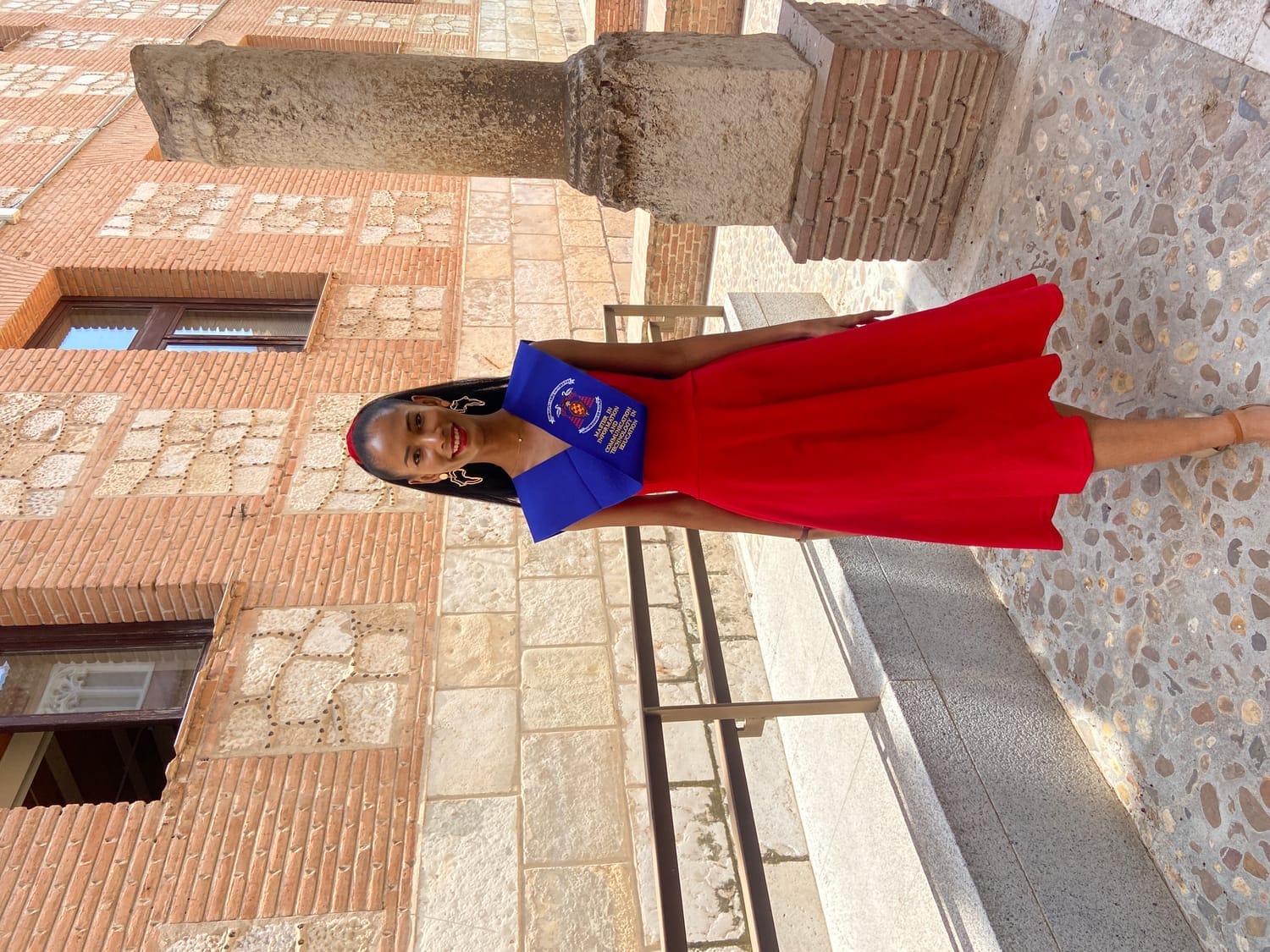
Lebo
Co-Facilitator / English Teacher
Teaching: Speaking with confidence.
Lebo works with children for whom English is a second, or third language, helping them build the kind of confidence in English that does not require them to leave their home language at the door. Her approach is warm, patient, and deeply practical, meeting each child at their own starting point and taking them further than they thought possible.
What Makes This Programme Different
Six Things Every Parent Should Know Before They Enroll
Unforgettable Junior is delivered in small cohorts so every child is seen, known by name, and coached at their own pace. Over six months, children build real skill alongside genuine self-belief.
01 · Small Cohort Sizes
Groups are kept intentionally small so each child receives individual attention and genuine coaching.
02 · Speech Therapist Involvement
A qualified speech therapist works within the programme because what may look like nerves can sometimes be something else entirely.
03 · English Language Support
Lebo supports children whose home language is not English, helping them carry existing confidence into the language without losing who they are.
04 · Fully Virtual
All sessions run online and is accessible to families anywhere in South Africa, without travel costs or commuting time.
05 · Progress Reports
Families receive a developmental report at midpoint and a final report at the close of the programme.
06 · Showcase & Certificate
The programme closes with a celebratory showcase and every child receives a certificate of completion
Is Something Holding Your Child Back?
Sometimes It's Confidence. Sometimes It's Something Else.
Parents often sense that something is getting in the way but can't quite put a finger on what it is. Before we coach, we pay attention. A child who is struggling to be heard may not need more encouragement. They may need something more specific.

They know what they want to say but it doesn't come out right
Unclear speech sounds and pronunciation challenges can make children feel unheard or misunderstood, even when their ideas are strong.
They go quiet in groups even when they know the answer
Some children have genuinely low confidence. Others are self-conscious about how they sound. Both look the same from the outside, but they need different support.
English is not the language they think in
A child who is already articulate and confident in their home language should not have to start from scratch in English. They need a bridge not a replacement.
They shrink in front of others even when they're prepared
Nerves are normal. But when preparation doesn't reduce the fear, it's worth understanding what is actually driving it before trying to coach it away.
They were never chosen to represent the school
In many schools, only a handful of children are given speaking opportunities. The rest are left to conclude that public speaking is not for them and that belief follows them.
They have the ability but not the belief
Capability and confidence are not the same thing. A child can be intelligent, thoughtful, and full of ideas and still not believe that what they have to say is worth hearing.
Every child in the programme is observed by a qualified speech therapist and an English language educator. If additional support is identified, parents are informed privately and all recommendations are entirely optional.
Three Levels. One Clear Path.
Every child is placed in the level that matches where they actually are, not just their grade. The programme runs over six months, with modules delivered in two-week cycles of learning then applying.
Foundation Level
Junior Primary
Grades 1 – 3
1 hour · weekly
Focused entirely on emotional safety and early self-expression. These sessions are playful and unhurried because younger children build confidence through experience, not instruction. Children learn that their thoughts and ideas are worth sharing.
Development Level
Senior Primary
Grades 4 – 7
1.5 hours · weekly
The focus shifts to clarity, structure, and the ability to participate confidently in academic and social settings. Children learn to organise their thoughts before speaking, manage the voice shake, and handle oral presentations with preparation.
Leadership Level
High School
Grades 8 – 12
1.5 hours · weekly
Communication becomes a tool for leadership and personal identity. Teenagers refine their voice, build a confident presence, and prepare for the moments that matter, bursary interviews, university applications, leadership roles.
Programme Investment
An Investment in the Skill That Shapes Everything Else
The programme is priced on a monthly basis over six months, structured this way so families can plan ahead, and so your child has the time they actually need to build genuine, lasting confidence.
The programme is priced at R1,450 per month for Foundation (Grades 1–3),
R1,750 per month for Development (Grades 4–7),
and R1,950 per month for Leadership (Grades 8–12),
paid monthly over six months.
Spots are limited per level to protect the quality of coaching and ensure every learner gets attention. Once groups are full, we start a waiting list for the next cohort.
Before You Enroll
Questions Parents Ask Us
My child is already doing well at school. Do they still need this?
Doing well and communicating with genuine confidence are different things. The children who build these skills early are the ones who raise their hand first, lead groups naturally, and walk into interviews without shaking. This programme takes a child who is doing well and gives them a real advantage.
My child is very shy. Will they cope in a group setting?
Yes, and this is exactly where shyness starts to dissolve. Cohort sizes are small, facilitators are trained to bring quieter children along at their own pace, and every session is designed to feel safe. Most parents notice the shift after session two or three.
Afrikaans is my child's first language. Is this still relevant?
Especially relevant. Lebo's English language support is woven through the programme specifically to help children who are already confident in another language carry that ease into English without losing who they are.
What does the speech therapist involvement actually mean?
A qualified speech therapist supports specific modules and, if they identify that a child would benefit from additional guidance, parents are informed privately. There is no obligation, it is offered as a recommendation, never a verdict.
Is this the same as elocution lessons?
No. Elocution focuses on pronunciation and tone. This programme teaches children how to think clearly under pressure, structure their message, manage nerves, and communicate with real presence, the skills that matter in a classroom, an interview room, and eventually a boardroom.
The Earlier They Learn This, The Further It Takes Them.
Public speaking and English confidence are not just “nice extras”. They shape how your child is seen, how opportunities open up and how boldly they step into the future.
Give them the advantage of feeling calm, clear and confident when it’s their turn to speak, in class, at home and in the wider world.
Foundation (Grades 1–3) · Development (Grades 4–7) · Leadership (Grades 8–12) · Limited spaces per level.